ECOLOGICAL MAKING IN INTERCULTURAL COOPERATION THROUGH STEAM
VISION
EMIC-STEAM aims to integrate MAKER educational spaces in schools as an important learning environment for education and sustainable development (ESD) in the field of environmental education, as well as the development of intercultural and foreign language skills. The pedagogical concept to be developed is based on the Content and Language Integrated Learning (CLIL) approach, thus combining the didactics of the foreign language, English, with those of the subjects involved: biology, geography and art.
MAKING
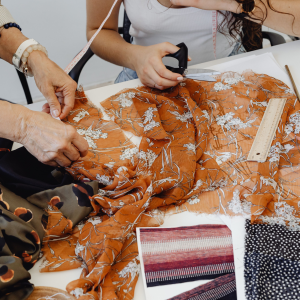
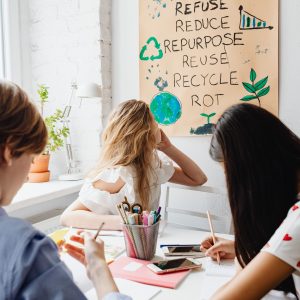
In the EMIC STEAM project, Making is a creative, hands-on approach to learning where students actively engage in developing solutions to real-world challenges. It blends technical, artistic, and social perspectives and encourages learners to prototype, build, test, and reflect—whether through physical creations, digital tools, or mixed formats. Making isn’t just about crafting objects; it’s about fostering critical thinking, collaboration, and problem-solving through purposeful creation. Rooted in the principles of design thinking and project-based learning, Making empowers students to become inventors, designers, and changemakers.
PROJECT GOALS
Enabling students to participate in sustainable global solution and negotiation processes by fostering students’ Making capabilities & Futures Literacy and strengthening their agency in the context of climate change
Fostering girls’ and young women’s interest in STEM through a STEAM approach
Contributing to the further development of Makerspaces by integrating CLIL and making-approach
CLIL
is defined as a dual-focused educational approach in which an additional language is used for the learning and teaching of both content and language (Coyle et al., 2010; Marsh, 2002). Language is viewed as a practical tool for learning and sharing knowledge across all subjects.
ESD
seeks to support learners in developing the knowledge, skills, values and dispositions required to engage with sustainable futures and the long-term social transformation associated with the Sustainable Development Goals (Glavič, 2020; UNESCO, 2014).
ECOLOGICAL MAKING
is a hands-on, multidisciplinary approach to learning where students solve real-world problems by designing, building, and testing physical or digital prototypes.is a hands-on, multidisciplinary approach to learning where students solve real-world problems by designing, building, and testing physical or digital prototypes.
Funded by the European Union. Views and opinions expressed are however those of the author(s) only and do not necessarily reflect those of the European Union or the European Education and Culture Executive Agency (EACEA). Neither the European Union nor EACEA can be held responsible for them.
Project Partners
EMIC-STEAM brings together 4 universities and 6 schools from across Europe.